

Trish (Patricia Heraghty) just started this channel and look how many views her videos are getting!
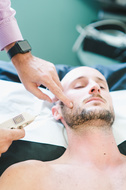
If you’re going to make videos, technique videos and patient interaction videos are the best. That’s what patients want to see.
Yes, videos showing your personality are ok sometimes, such as funny ones. But prospective patients really just want to see what you do and what it’s like. Peeps tend to get cute with their videos and that doesn’t bring patients in.
As far as what to post, think about it from the prospective patient’s perspective. If you never saw or had acupuncture, do you think dark red cupping marks, excessive red shah from gua sha, or cups with blood in them would be ok? How about a big flame over someone’s body with fire cupping? Or would that probably scare the crap out of them?
Showing assessment, acupuncture, soft tissue work, and especially before and afters, are HUGE. The impact is immense. Testimonials are powerful too.
If you look at the busiest clinics, the majority of, or all of their content, is showing what they do. It may also be patient interactions or, if they are athletes, posts about their athlete patients.
I’m sorry to say, prospective patients don’t care about you, or your likes/dislikes, or your day to day stuff. Particularly people who don’t know you. Don’t make it about you. Make it about what you can do for them. Your personality will come out in those videos and then patients feel they know you and what to expect when they interact with you.
See Dr. Lombardi’s YouTube channel Hamilton Back Clinic and Darren O’Rourke’s Instagram physicare_dublin for more examples.
Trish’s YouTune channel is here:
https://youtube.com/@acupunctureworks132?si=9KYuJgbwKOmBrvGt
This clip from 2017 sums up one of the biggest issues we see when treating MSK and pain conditions with needles — and also the solution.
The problem is not the lack of different techniques.
The problem is knowing when to use them, why to use them, and when not to use them.
Motor points, trigger points, electroacupuncture, peripheral treatments, central nervous system approaches — all of these can be valuable.
But they are not interchangeable.
The real skill is understanding how to apply those techniques through the lens of neurology, assessment, and clinical reasoning.
That means identifying what type of problem is actually in front of you, determining the most appropriate treatment strategy, and then reassessing to see whether you actually changed what you intended to change.
That is the difference between simply performing a technique and treating with precision.
And that is exactly what the EXSTORE™ Orthopedic System is built to teach.
EXSTORE gives practitioners a complete, ...

I have a 63 year old man with bilateral bone on bone pain in the fingers, primarily the base of the fingers but also the next joint up. What sort of treatments can we do?
Where the real learning happens.
Click here to join: https://us02web.zoom.us/meeting/register/fBsZkCJVQ8KbN5vV5pfkkw